
One of the most invasive plants currently plaguing southern Ontario is the Phragmites reed (Phragmites australis ssp. australis). It is seen in increasing large swathes alongside many highways. The stalks can be over 5m tall, swaying majestically in the wind. Despite its serene appearance, phragmites are very harmful to local ecosystems, spreading rapidly and forming monocultures that undermine biodiversity and local food webs. Phragmites typically grow in or near wetlands.
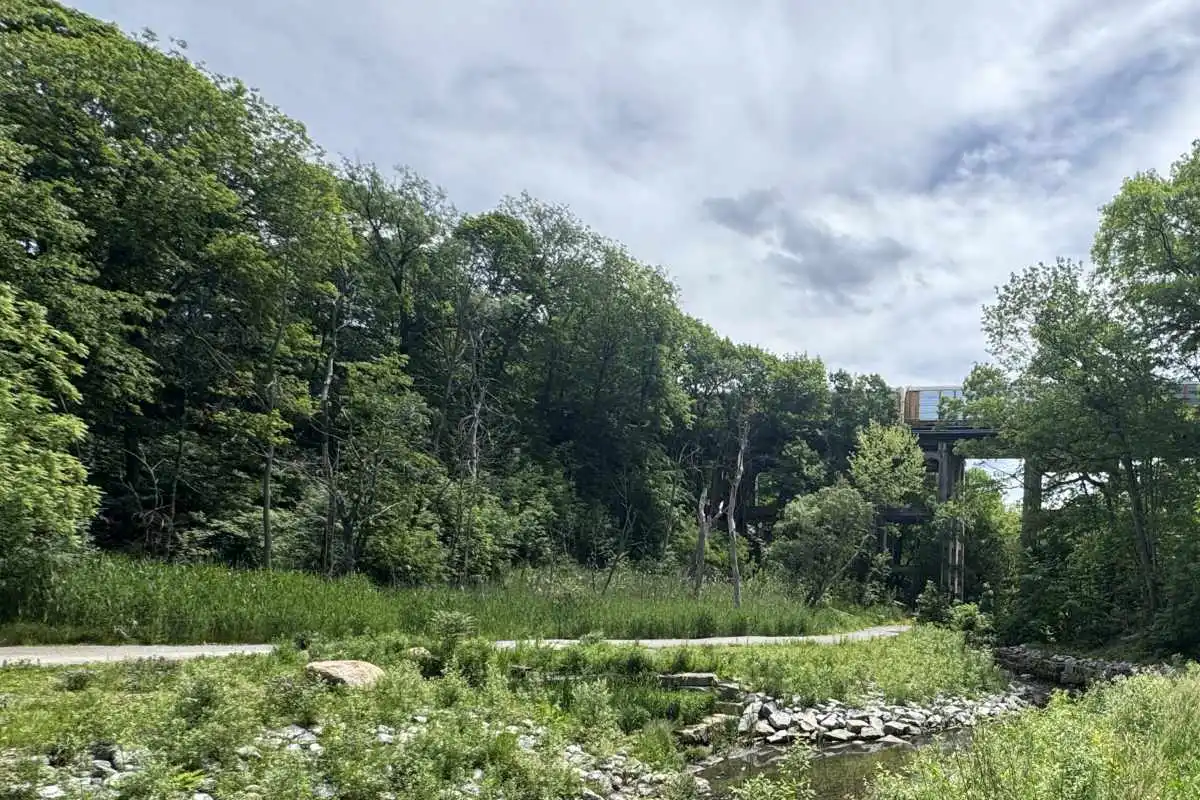
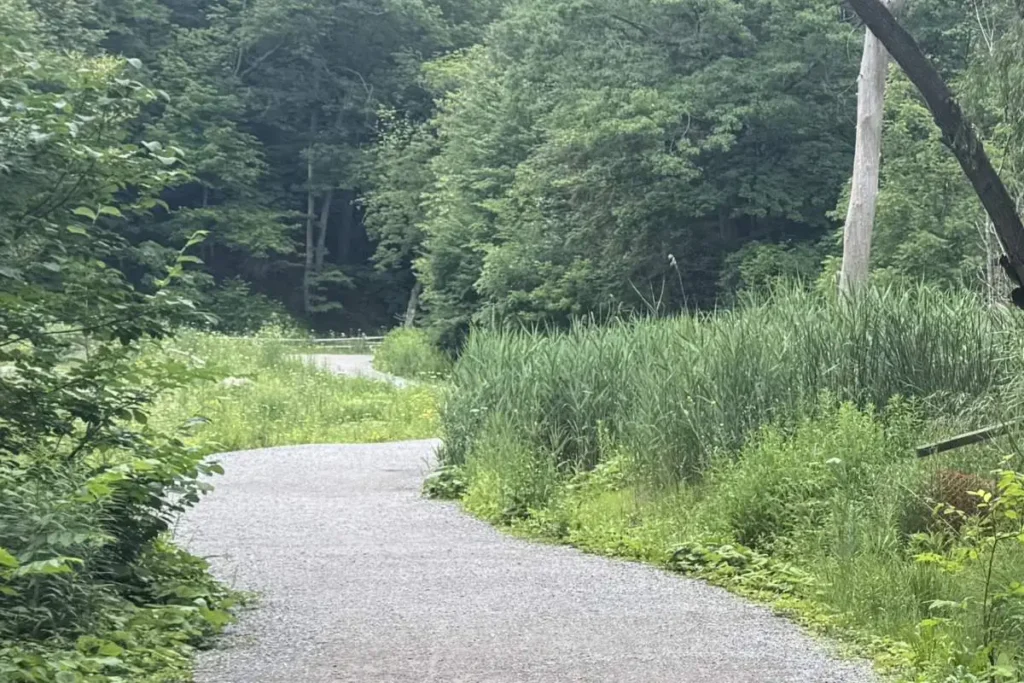
There are currently at least two colonies of Phragmites in the Vale of Avoca. The larger of the two is along the main path running north from the railway bridge, in the southern half of the Vale. There is a marsh-like area on the east side of the trail (opposite side from Yellow Creek), and it is now a Phragmites monoculture for about 50m along the side of the trail, and going away from the trail for 10m or more in places. Another smaller patch is located on the east side of Yellow Creek, a little ways south of the St. Clair viaduct.
Phragmites is a Prohibited Plant under the applicable Toronto by-law (Municipal Code Chapter 489), and is also a Restricted Species under Ontario’s Invasives Species Act, 2015. Part of the problem with Phragmites is that they are hard to get rid of. According to Toronto Nature Stewards, 80% of the plant’s biomass is underground, and its spread is propelled by rhizomes, that spread horizontally and generate new plants. The plants roots can extend up to 6 feet down into the soil. One effective (but laborious) control measure is called spading, where stalks are cut away from the root system using a sharp spade. Cutting the main shoots repeatedly will gradually deplete the plants’ energy reserves. This technique can terminate a Phragmites colony if applied diligently for a period of three to five years. Plants can also be controlled using herbicides, other physical control, and –possibly in future– biological control measures.
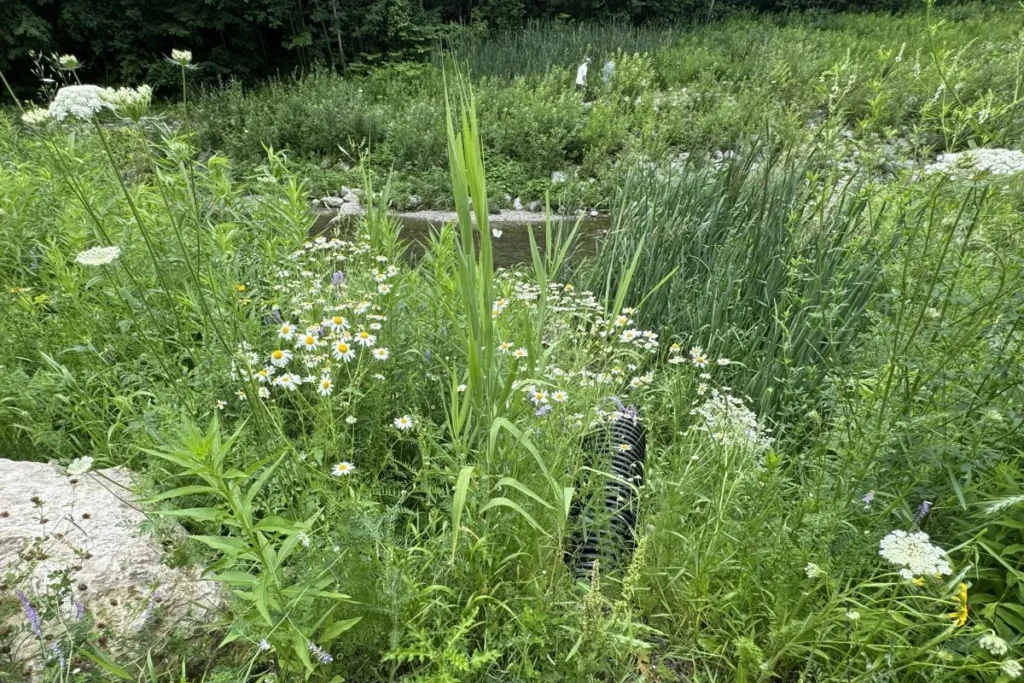
In the absence of control measures, the Phragmites will relentlessly spread to dominate contiguous areas, particularly in the vicinity of wetlands. The Avoca Phragmites are unlikely to stay confined in their current locations. Indeed, Phragmites stalks are now appearing on the west side of the trail, potentially poised to take over much of the Yellow Creek embankment. This is a newly established area as part of the recently completed channel upgrade. The stream bank in this area is a combination of rock and vegetation that is designed to withstand elevated stream flows. It would be extremely unfortunate to see the currently diverse plant populations along Yellow Creek gradually replaced by a wall of Phragmites.
Friends of the Vale and other ravines should familiarize themselves with Phragmites and be mindful of its continuing spread, including appearances in new areas. The Midtown Ravines Group will continue to advocate with the City for effective management of the Avoca Environmentally Significant Area (ESA), with a particular emphasis on ensuring that the spread of Phragmites is contained and eventually reversed. Note that park and ravine by-laws preclude individuals from removing invasive species (or any other plants) from parks and ravines. What can you do? A useful step is to submit a 311 service request to the City in situations where invasives are a particular threat to an area. This can be done through the category “Invasive and Hazardous Plants in Parks and Ravines” within the on-line service request function of 311 Toronto.